
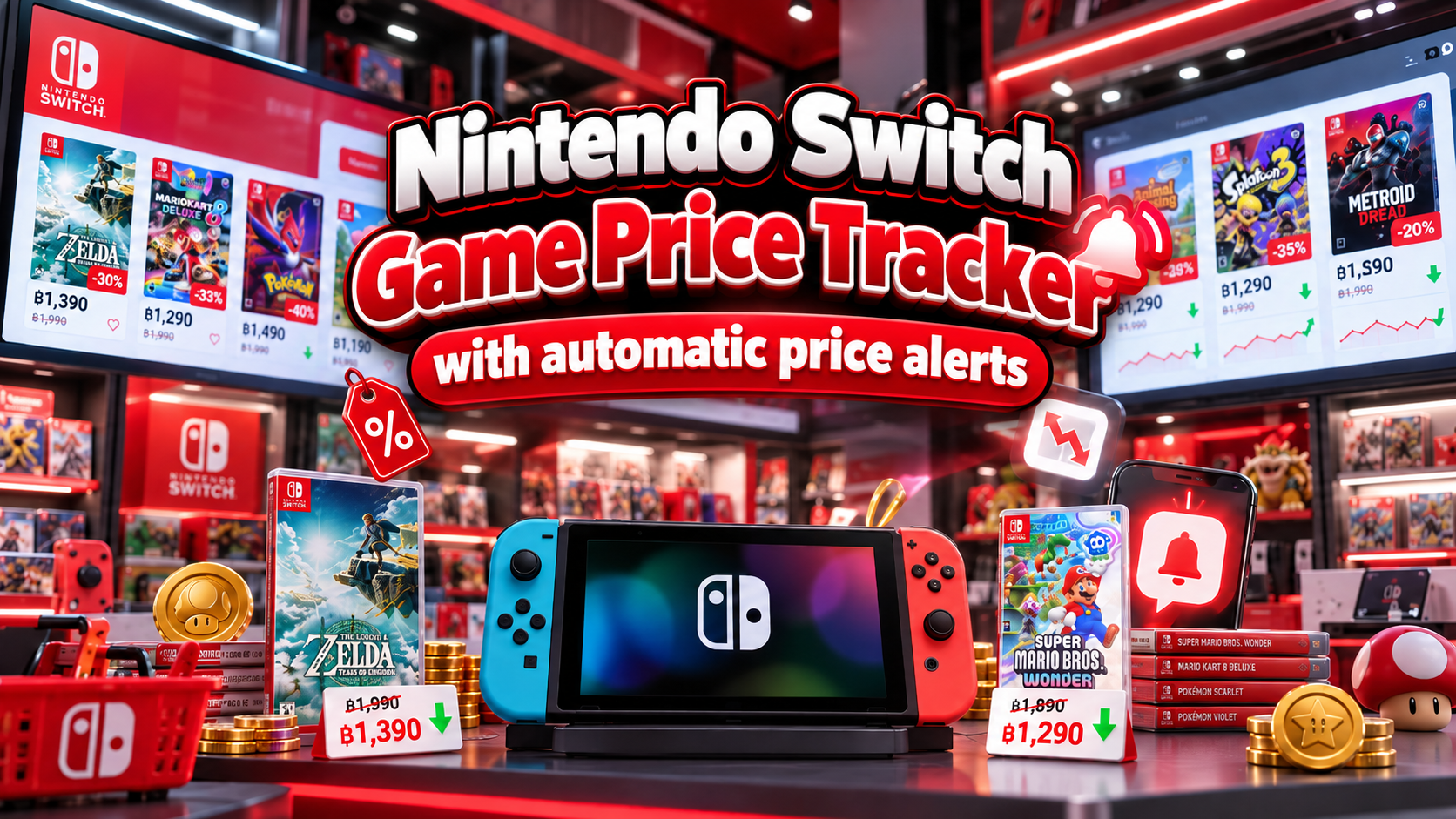
Manually trying to check price nintendo switch every single day wastes a lot of time, especially if you're waiting for a specific discount. This guide rounds up tools and automatic alert setups for check price nintendo switch, so you know the moment a price drops without opening a dozen tabs yourself.
Key Takeaways
- Setting up automatic alerts saves a lot of time compared to manually checking every day
- Some tools show historical pricing charts to inform your decision
- Store wishlist features often notify you when an item goes on sale
- Setting a target price helps you decide quickly once it's reached
- Using several tools together covers a wider range of retailers
Why Use Alerts Instead of Manually Checking
Manually trying to check price nintendo switch isn't hard, but it adds up to a lot of wasted time over weeks or months of doing it repeatedly. Automatic alert tools make sure you never miss a discount window without spending time opening several sites every single day.
Beyond saving time, these tools also reveal long-term price trends, making it easier to decide whether to wait or buy right away.
Types of Tools You Can Use to Track Prices
- Price comparison sites that display a historical price chart for each game
- Wishlist features in store apps or sites that notify you when something goes on sale
- Social media groups or pages that post real-time updates on game discounts
Using several types of tools together usually covers more ground than relying on just one, since not every retailer gets tracked by the same tool.
How to Set a Target Price Before You Start Tracking
Before setting up a system to check price nintendo switch, it helps to decide on an acceptable target price in advance, so you can commit the moment it's reached without spending too long deliberating and missing a limited-time promotion.
Looking at historical pricing before setting that target also helps you pick a realistic number rather than one that's too high or too low for the actual market.
What to Watch Out for When Using These Tools
- Only use tools from trustworthy sources
- Never hand over unnecessary account details to a third-party tool
- Double-check an alerted price against the actual retailer page before buying
Building a Simple Weekly Habit Around Price Tracking
Rather than checking constantly, setting aside a fixed few minutes once a week to review accumulated alerts for titles on your list tends to work just as well as checking daily, while taking up far less time overall.
This weekly habit also makes it easier to spot a genuinely good deal versus a minor discount, since you're comparing several alerts side by side instead of reacting to each one individually.
Frequently Asked Questions About
- How many games can I track alerts for at once: most tools don't cap this, it depends on which one you choose
- Can an alert lag behind the actual price: occasionally, so always double-check the live page before buying
- How low should I set my target price: the lowest historical price is usually the most reasonable reference point
Which Games to Track First on a Long Wishlist
If your list is long enough that you don't know where to start with check price nintendo switch, start with higher-priced titles that have historically discounted often, since those save the most money per alert set up. Lower-priced games that rarely discount may not be worth the setup effort.
Prioritizing this way puts your limited tracking time toward the titles offering the best return, instead of setting alerts for every game on your list with no sense of priority.
Match Alert Settings to Your Own Checking Habits
Getting the most out of a check price nintendo switch setup isn't just about picking a good tool, it also means tuning the alert frequency to your own habits. Some people want a notification the instant a price moves even slightly, while others prefer a batched summary every so often so alerts don't turn into a constant distraction.
Setting this up to match your own habits from the start makes you far more likely to keep using the tool long-term, instead of abandoning it because alerts felt either too frequent or too sparse.
Free Tools Versus Paid Tools
- Free tools usually cover the major retailers well enough for most casual shoppers
- Paid tools often add deeper insights, like more detailed historical price charts
- Always start with a free option first, then consider upgrading only if it's genuinely needed
What to Do When an Alerted Price Looks Off
Occasionally, a tool tracking check price nintendo switch might show a price that doesn't quite match the live listing. This is usually just a lag in how often that tool refreshes its data rather than a serious error. The safest fix is always opening the actual retailer page to confirm the current price before placing an order.
If a particular tool shows mismatched prices unusually often, that's a decent signal it might be worth switching to a more reliable alternative instead.
Review Your Tracked Games List Periodically
After running a check price nintendo switch setup for a while, it's worth periodically reviewing the list of games you're tracking, since some titles you once wanted badly may no longer be a priority. Removing titles you've lost interest in makes the remaining alerts more meaningful and lowers the odds of missing an important one buried in a list that's gotten too long.
This kind of review is also a good moment to add newer titles you've since become interested in, keeping the whole alert setup aligned with what you actually want right now rather than what you wanted months ago.
In short, using automatic tools to check price nintendo switch saves time and helps you catch discounts you'd otherwise miss. Combining several tools and setting a target price in advance is the best way to buy at the right moment.